
Why bundling your roof and solar saves thousands.
Installing solar on an aging roof creates a bottleneck that catches most homeowners by surprise a few years later.
Adding solar panels to your home is one of the most effective ways to break free from rising electric rates on Long Island. But one of the most common—and most expensive—mistakes homeowners make is installing a brand-new solar system on top of an aging roof.
The problem with old roofs and new panels
If your shingles are more than 10-12 years old, putting solar panels over them creates a financial bottleneck down the road. Asphalt roofs on Long Island typically last 15-20 years given our Nor'easters, summer heat, and winter ice—while solar panels are built to perform for 25-30 years. That mismatch means the roof underneath your panels will very likely need replacement before the panels themselves do.
When that happens, you can't just work around the array. A crew has to detach the entire system, store it safely, wait for the roof to be replaced, and then reset and re-wire everything—a process that easily adds $3,000 to $7,000+ in labor on top of the roof replacement itself. Worse, if a leak develops later near a roof penetration, the roofing company and the solar company often point fingers at each other, leaving you stuck in the middle.
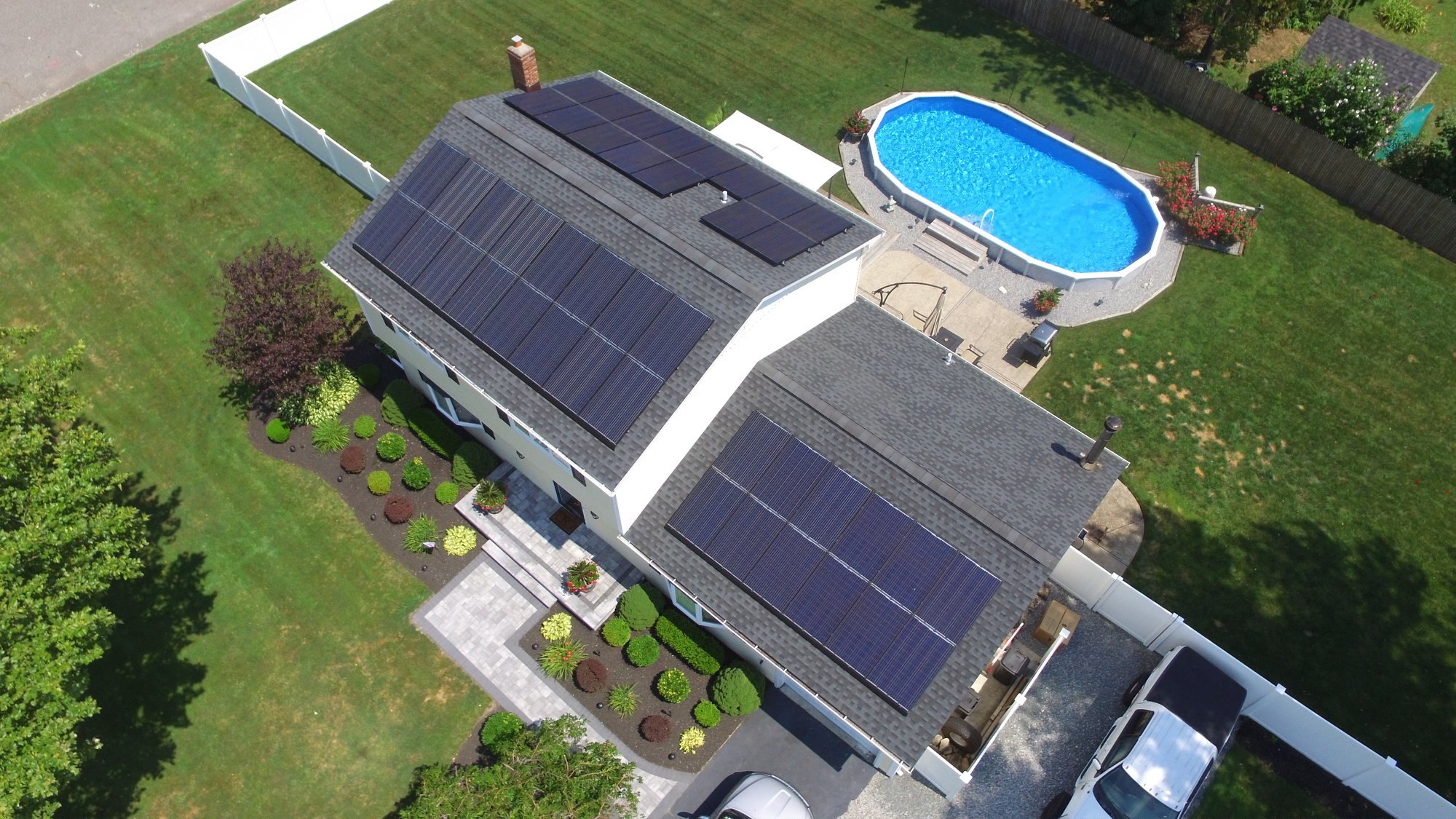
The integrated solution
At Power House, we solve this by executing your roof replacement and solar installation simultaneously, with one team accountable for both. Whether you choose traditional panels or lower-profile integrated options, bundling the project gives you three real advantages:
Stacking incentives
Combining roof replacement with solar also lets you optimize incentives across the full project—the federal Clean Energy Credit, PSEG Long Island and NY State rebates, and increased property value all apply more efficiently to a bundled project than to two separate ones done years apart.
If your roof is approaching the 10-15 year mark and you're considering solar, the smartest first step is a combined roof-and-solar inspection—before you sign a contract for standalone panels.