
Commercial Solar on Long Island: Businesses, Non-Profits & Houses of Worship
The federal tax credit for homeowners is gone. For businesses and non-profits, a 30% federal credit is still on the table, but the clock is running.
By Steve Maroney, founder of Power House Home Energy · Updated October 2026
Long Island businesses, non-profits and houses of worship can still claim the 30% federal commercial solar credit (Section 48E), but for most new projects the system must be placed in service by December 31, 2027. Businesses may also be able to deduct the system's cost through 100% bonus depreciation, and tax-exempt organizations like houses of worship, schools and non-profits can receive the credit as a direct cash payment from the IRS through elective pay. With PSEG Long Island commercial rates among the highest in the country, the window for commercial solar is open now, but it won't stay open.
Why 2026 and 2027 matter
Under the 2025 federal tax law, the commercial solar credit ends for solar projects that started construction after July 4, 2026, unless they are placed in service by December 31, 2027. Commercial projects take longer than homes: engineering, structural review, permits and PSEG Long Island interconnection approval can take months before installation day. A business that starts planning in 2026 has time to finish. One that waits until late 2027 likely won't.
Placed in service by Dec. 31, 2027
The deadline for most new commercial solar projects to qualify for the 30% federal credit.
Plan for months, not weeks
Commercial engineering, permits and interconnection take longer than residential. Starting early protects the credit.
Who commercial solar is for
Owner-occupied businesses
Offices, shops, warehouses and light-industrial buildings, including the Hauppauge Industrial Park, where the business owns its roof and pays its own PSEG Long Island bill.
Dealerships, retail and restaurants
Big roofs, long hours and high daytime use, which is exactly when solar produces the most.
Non-profits, houses of worship and schools
Tax-exempt organizations can receive the federal credit as a direct payment through elective pay, so the savings go back to the mission.
Medical buildings
Medical and dental offices, urgent care and outpatient buildings run lights, HVAC and equipment all day, so solar offsets their highest-cost hours.
Self-storage facilities
Large flat roofs, low on-site use and long ownership horizons make self-storage one of the best fits for commercial solar.
Corporations and multi-site owners
Larger systems, roof or carport, designed around the building's real load and your accounting team's goals.
The incentives, at a glance
| Incentive | Who it's for | What it's worth |
|---|---|---|
| Federal commercial solar credit (Sec. 48E) | Businesses that own the system | 30% of the project cost for most small commercial projects, if placed in service by Dec. 31, 2027 |
| Elective pay (direct pay) | Non-profits, houses of worship, schools, local governments | The federal credit paid as cash by the IRS instead of a tax credit |
| 100% bonus depreciation | Businesses that own the system | Potentially deduct the system's cost in the first year (basis reduced by half the credit) |
| New York property tax exemption | Most property owners | The value solar adds is exempt from property tax for 15 years in most municipalities |
| Lower PSEG Long Island bills | Every owner | Solar offsets daytime use at commercial rates that keep rising |
Federal rules on equipment sourcing, wages and apprenticeship can affect larger projects. We design and document projects to protect the credit, and your accountant confirms how it applies to your business.
Ways to pay
Commercial projects
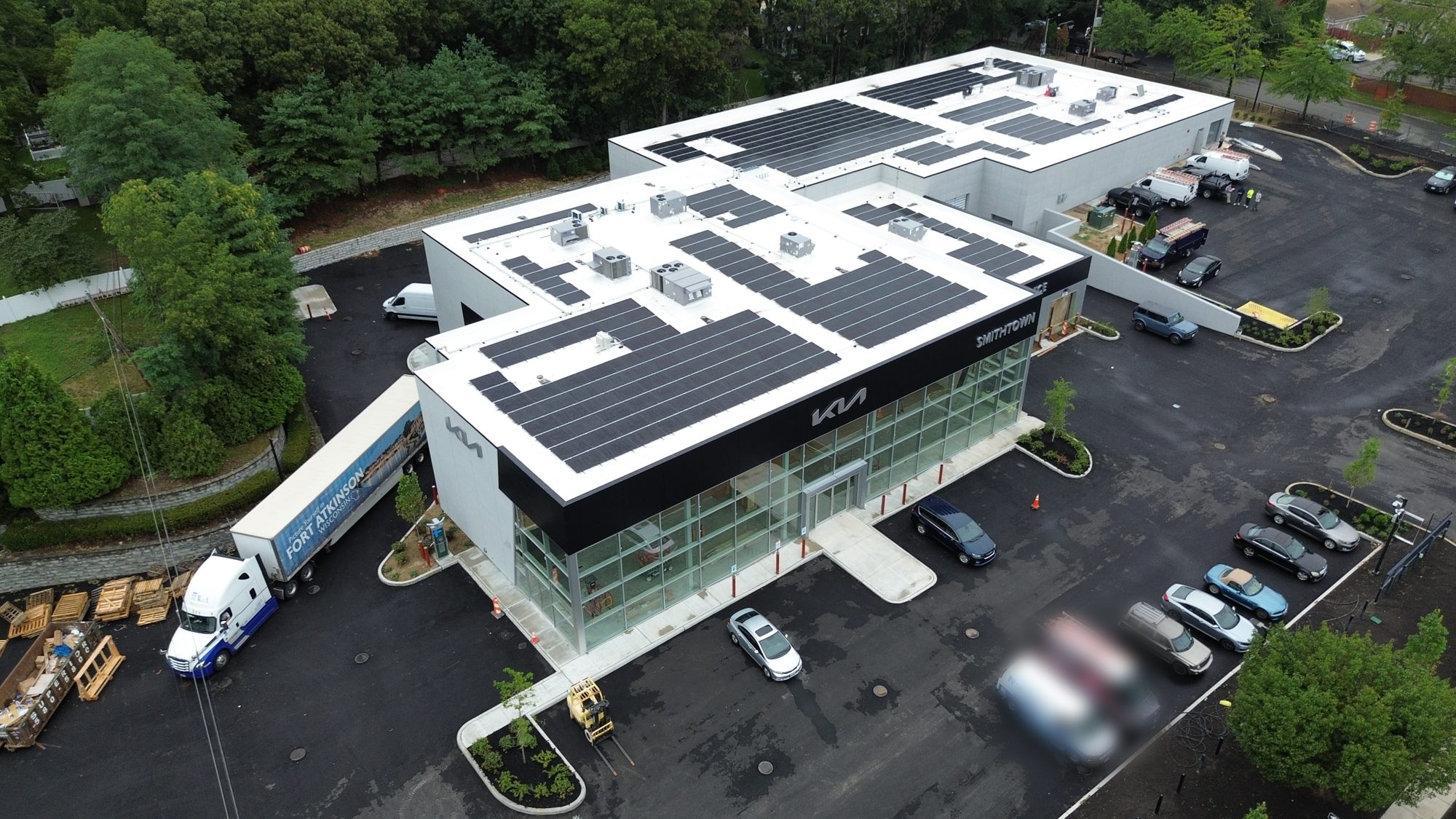
Smithtown Kia
A large flat-roof commercial solar system spread across the showroom, service and shop roofs of one of Smithtown's best-known dealerships, laid out around rooftop HVAC equipment on ballasted racking weighted with concrete blocks. Installed by our installation partner, Greenleaf Solar.
Photos courtesy of Greenleaf Solar.
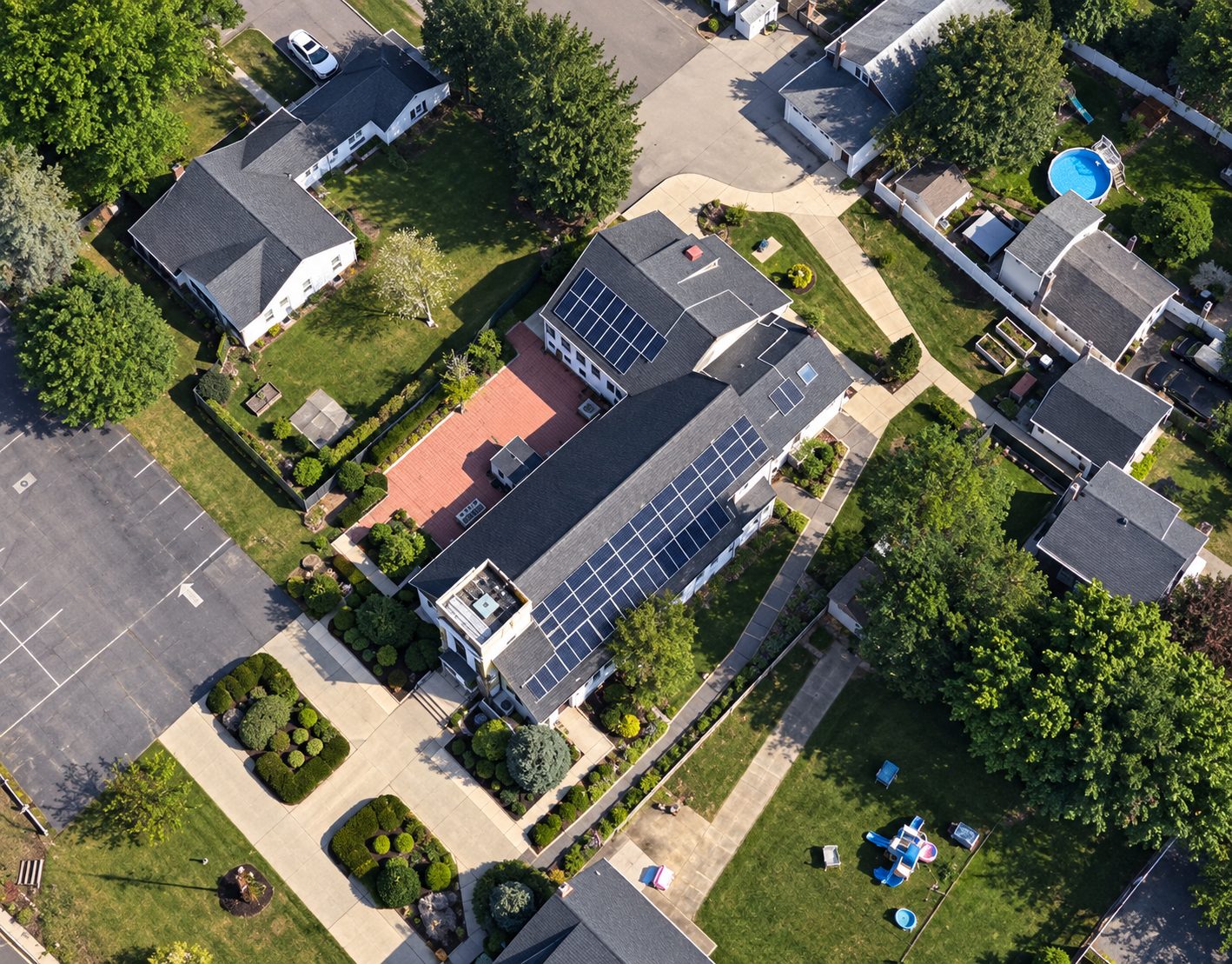
St. Mary's, Ronkonkoma
A rooftop solar system for St. Mary's parish in Ronkonkoma. Steve Maroney was the driving force behind the project, which he led during his career before founding Power House.
Project led by Steve Maroney before founding Power House Home Energy.
How a commercial project works
| Step | What happens |
|---|---|
| 1. Energy and building review | Twelve months of PSEG Long Island bills, your roof or parking area, and your goals |
| 2. Design and financial model | System design, production, savings, the federal credit and depreciation, and payback |
| 3. Engineering and structural review | Stamped drawings and roof structural analysis |
| 4. Permits and PSEG Long Island interconnection | We file everything; larger systems take longer to approve |
| 5. Installation | Scheduled around your business hours to keep disruption low |
| 6. Inspection and Permission to Operate | Your system turns on and starts saving |
Why Power House for commercial solar
This page is general information, not tax advice. Credit eligibility, bonus credits, depreciation and elective pay depend on your organization, the project and federal rules, which can change. Confirm with your tax advisor.
Common questions
Is the federal solar tax credit still available for businesses?
Yes. Businesses can still claim the 30% federal commercial solar credit (Section 48E), but for most new projects the system must be placed in service by December 31, 2027.
Can houses of worship and non-profits get the solar tax credit?
Yes. Through elective pay, tax-exempt organizations like houses of worship, schools and non-profits can receive the federal credit as a direct cash payment from the IRS.
Can a business depreciate a solar system?
In many cases, yes. Federal law restored 100% bonus depreciation for qualifying property, which can let a business deduct the system's cost in the first year. The depreciable basis is reduced by half of the credit. Your tax advisor confirms how it applies.
How long does a commercial solar project take?
Longer than a home. Engineering, structural review, town permits and PSEG Long Island interconnection approval can take several months before installation. Starting early is the best way to meet the December 31, 2027 deadline.
Do you finance commercial solar?
Yes. Options include cash and commercial solar loans through lenders including SunStone, and elective pay for tax-exempt organizations.