
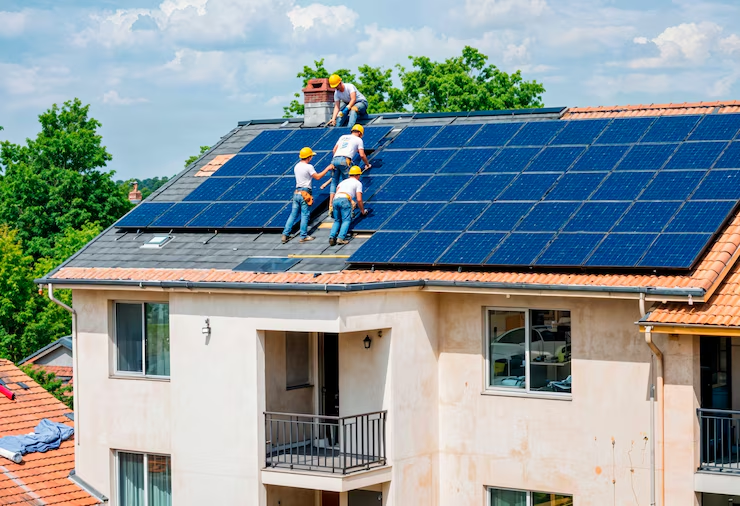
With PSEG Long Island electricity rates continuing to hit record highs, it’s completely logical that your neighborhood is filling up with solar panels. Transitioning to clean, renewable energy is one of the single most effective ways a New York homeowner can permanently slash their fixed monthly overhead.
However, a dangerous trend is happening across Nassau and Suffolk Counties. Eager to hit sales quotas, many traditional solar companies are rushing homeowners into contract and bolting heavy solar panel arrays directly onto shingles that are already past their prime.
This is the single most expensive mistake a homeowner can make. If your roof has less than 10 to 15 years of operational life remaining, installing solar panels on top of it sets you up for a financial nightmare down the road.
The True Cost of Split Liabilities: The $5,000 Detach-and-Reset Fee
A Tier-1 solar panel system is a beautifully durable piece of technology built to generate electricity safely for 25 to 30 years. But what happens if the architectural shingles underneath those panels start to fail, rot, or leak just seven years after the install?
To patch a roof leak or replace bad shingles beneath a solar array, a standard roofing crew cannot simply work around the equipment. You have to call a specialized crew to come out and carefully decommission the electrical system, unbolt and remove every single panel, tear off the old shingles, replace the roof, and then reinstall and rewire the solar array.
This process is known in the construction industry as a “Detach and Reset.” Because it requires specialized solar technicians and structured labor, a detach-and-reset routinely costs between $4,000 and $7,000—and that is just the labor fee to move the panels out of the way. It does not include the actual cost of fixing your roof. Worst of all, traditional roofing contractors will often refuse to touch a roof with active solar brackets, while solar companies will blame the roofers for any leaks, leaving you trapped in a loop of finger-pointing and denied warranty claims.
The Power House Solution: Single-Source Engineering
At Power House Home Energy, we eliminated this entire vulnerability by structuralizing our corporate framework. We believe that your roofing system and your solar array must be engineered as a single, unified asset.
When you partner with our team, your project undergoes a strict, multi-point structural review before a single contract is finalized:
-
Comprehensive Decking Analysis: Our certified roofing professionals evaluate your roof’s underlying plywood decking, structural rafters, and current ventilation health. If your roof is compromised, we map out a plan to upgrade both elements simultaneously.
-
Leak-Proof Mechanical Flashing: We refuse to use cheap caulking or generic sealant compound around solar roof mounts. Our crews utilize commercial-grade, multi-layered mechanical flashing that weaves directly into your roofing shingle courses, creating a water-tight seal built to withstand intense coastal nor’easters.
-
Uncompromised Lifetime Warranty: Because Power House installs both the roof and the solar panels, your entire structural and electrical home envelope is protected under a single, ironclad corporate warranty. If a problem ever arises, you have exactly one number to call, completely eliminating split-liability games.
Financial Reality: Combining Solar and Roofing Unlocks Savings
If your home requires a fresh roof and you want to convert to solar, combining these two home improvement projects into a single pipeline isn’t just safer—it’s significantly smarter for your wallet.
| Project Component | Separate Contractors | Power House Integrated Approach |
| Roof Inspection | Basic visual estimate by a third-party roofer. | Full engineering analysis focused on long-term panel weight bearing. |
| Federal Tax Incentives | 30% Tax Credit applies only to the solar equipment cost. | In many cases, critical structural prep work can be packaged alongside solar incentives. |
| Warranty Backing | Roof warranty voided if solar company punctures shingles. | Single-source structural warranty covering both shingles and solar components. |
The 72-Hour Rule: Don’t let an aggressive door-to-door solar salesperson pressure you into signing a contract without a comprehensive roof assessment. If they don’t step foot in your attic to check your rafters, they aren’t protecting your home.
Stop worrying about utility rate hikes and protect your roof’s integrity.
